
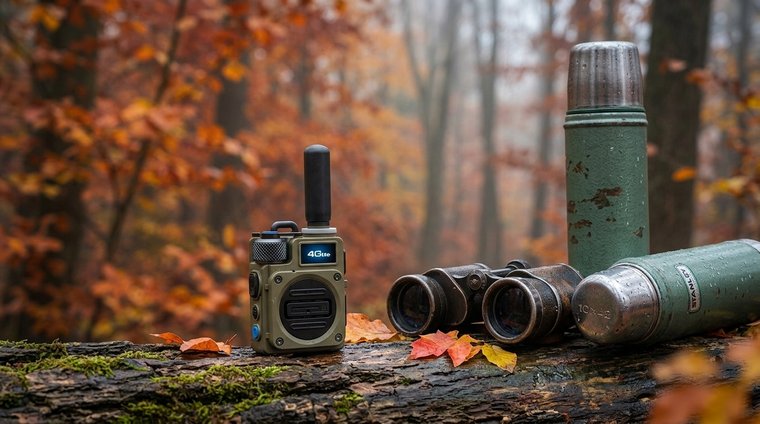
I've been hunting deer and elk for twenty years across the Appalachian Mountains and Colorado backcountry. In that time, I've gone through more radios than I can count. Motorolas, Midlands, Baofengs, a couple of expensive GMRS handhelds. Every one of them has the same problem: the moment you drop into a hollow or walk under heavy canopy, you're talking to yourself.
Our hunting party is usually three or four guys, and we spread out over 500 acres or more. That's the whole point — you cover ground, you find sign, you communicate positions. Except in twenty years of trying, the "communicate" part has never actually worked reliably. FRS and GMRS are line-of-sight technologies. Valleys, ridges, and hardwood canopy eat those signals alive. We've spent entire mornings trying to raise each other on the radio, then resorting to texting with frozen fingers.
Last summer a friend sent me a link to the TalkiesWorldWide. A push-to-talk device that uses the 4G cellular network instead of radio frequencies. I read the page, looked at the price, and figured there had to be a catch. I ordered a DUO pack. Two radios, $199, SIM cards already installed. They arrived two days before archery season.
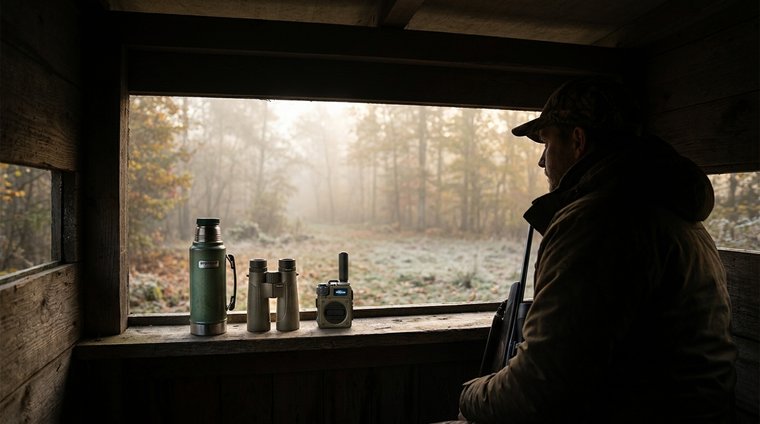
The dedicated external antenna is the difference — it picks up 4G signal where my phone and every standard radio can't.
The first morning out, my buddy Dale hiked over a mile into a hollow on the far side of the ridge. Dense hardwood cover, steep terrain, the kind of spot where my phone shows zero bars and every walkie-talkie I've ever owned goes completely silent. I pressed the button on the TalkiesWorldWide. He answered immediately. Not "sort of" immediately. Immediately. Clear voice, no static, no delay. I pressed it again ten minutes later just to make sure I hadn't imagined it.
What makes it work is the dedicated external antenna. This isn't a phone with a radio app bolted on. It's a purpose-built device with an antenna designed to pull in 4G signal in marginal coverage areas — places where your smartphone gives up. The thing connects to cellular towers that your phone can't reach because it's not sharing antenna real estate with Bluetooth, Wi-Fi, GPS, and everything else a phone tries to do at once.
"He was a mile into a hollow where my phone shows nothing. I pressed the button. He answered immediately. Twenty years of dead radios, and this one just... worked."
— Travis Beckett, Deer & Elk Hunter, 20 YearsWhy push-to-talk matters more than you think in the field
There's a reason hunters used radios for decades before smartphones existed, and it's not nostalgia. When you're sitting in a tree stand at 5 AM with temperature in the low twenties, wearing insulated gloves, the last thing you want to do is pull out a phone, unlock it with numb fingers, open an app, type a message, and wait for it to send over a signal that may or may not exist. A push-to-talk radio is one button. Press and talk. That's it.
The TalkiesWorldWide keeps that simplicity but removes the range limitation. It's the physical push-to-talk button married to 4G infrastructure — so you get walkie-talkie simplicity with cellular reach. I don't have to take my gloves off. I don't have to look at a screen. I press the button on the side, say what I need to say, and release. My whole party hears me instantly.
The AES-256 encryption is a detail I appreciate. Out in public land, you don't want every hunter with a scanner hearing your positions and movements. Standard FRS and GMRS channels are completely open — anyone with the same channel can listen in. The TalkiesWorldWide encrypts everything to military-grade standard. Your channel is yours.
Talkies has contacted us to let our readers know stock is available now. The DUO pack is $199 with free service included* for the first 2 years — no hidden fees, no subscription. Check availability while stock lasts.
Five days on one charge. I tested it.
Battery life was one of my biggest skepticisms. Cellular radios eat power — I've used apps on my phone that drain the battery in a few hours. The TalkiesWorldWide claims a multi-day battery. I charged all three units the Sunday before our week-long archery hunt and didn't touch a charger until we packed out on Friday. All three still had battery remaining. Five full days of intermittent use in cold weather, and they lasted the entire trip without a single charge.
That matters when you're camping. There are no outlets in a backcountry elk camp. I've carried battery banks specifically to keep radios and phones alive. Not needing to worry about the TalkiesWorldWide dying mid-hunt removed one more piece of friction from the trip.
And there's no license required. GMRS technically requires an FCC license. Most hunters don't bother, but it's always been an annoyance in the back of my mind. The TalkiesWorldWide operates on cellular data, not radio frequencies, so there's no license, no exam, no registration. You open the box, press the button, and you're legal.
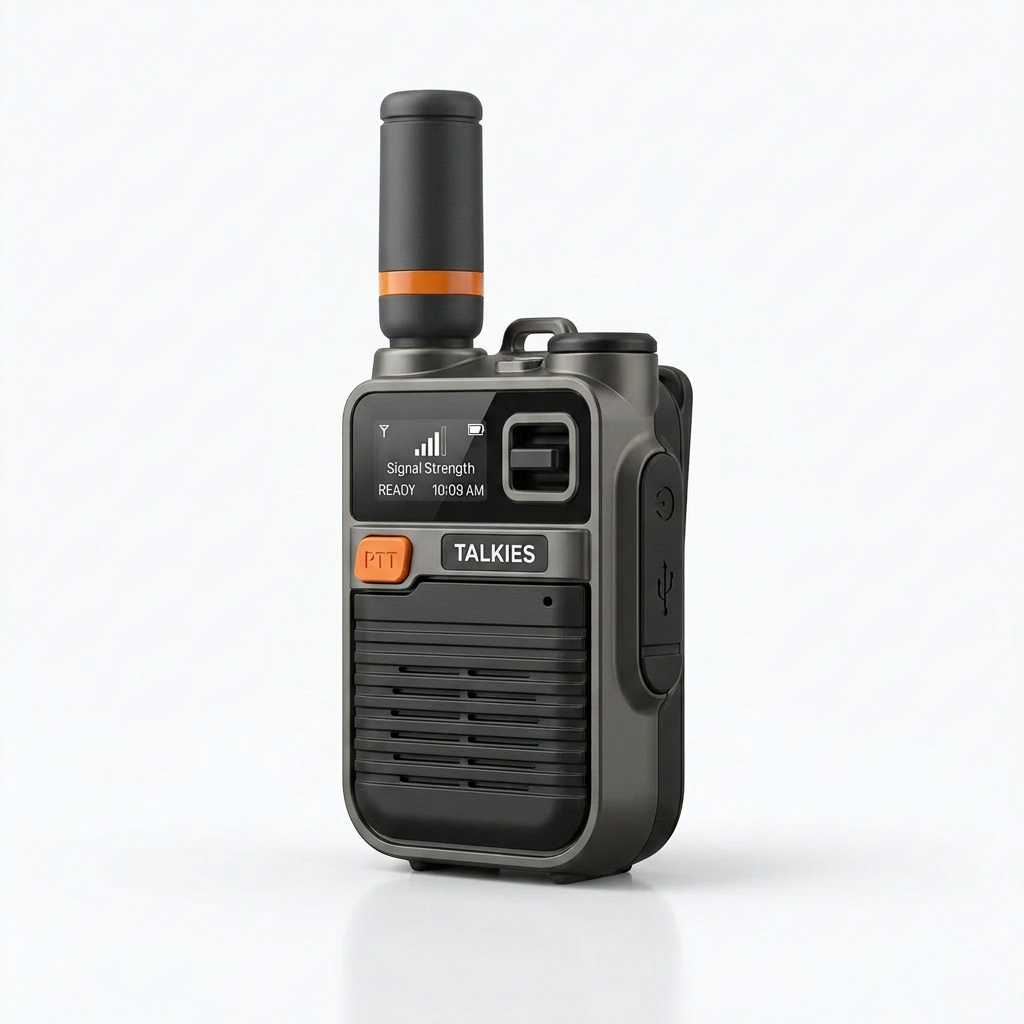
multi-day battery, AES-256 encryption, dedicated 4G antenna — built for hunters who actually need comms in deep cover.
What I'd tell another hunter considering this
I'm the kind of person who reads specs, watches fifteen YouTube reviews, and still doesn't believe the marketing until I've tested something myself. So here's my honest assessment after a full archery season with the TalkiesWorldWide TRIO:
It needs cellular signal to work. A true dead zone with zero 4G coverage is its limit. But that dedicated external antenna picks up signal in places my phone cannot — hollows, under canopy, in valleys where I'd assumed there was no coverage at all. In twenty years of hunting the Appalachians and Colorado, I've found very few spots where this device couldn't connect when my phone had already given up.
The TRIO at $279 covers a three-person hunting party. If you run four, the QUAD is $359. Single units are $149 and the DUO is $199 if you just want to try a pair first. Free service included* — the SIM is in the box, no subscription, no activation. You open it and you're transmitting.
Some notes:
- Works under tree cover — 4G cellular, not line-of-sight like FRS/GMRS
- Dedicated external antenna — picks up signal where your phone can't
- multi-day battery — charge it before the trip, forget about it until you're home
- Push-to-talk simplicity — one button, works with gloves, no fumbling with phones
- AES-256 encryption — your channel stays private on public land
- No FCC license required — operates on cellular, not radio frequencies
- Free service included* — no monthly bills, no subscription*
- SIM pre-installed — ready out of the box, no setup
I've spent twenty years pressing buttons on radios and hearing nothing back. Dead air in valleys, static under canopy, radios that work in the parking lot and quit the moment you walk into the timber. The TalkiesWorldWide is the first device I've carried into the field that actually did what it claimed. No dead zones. No lost hunters. Just press the button and talk.
Talkies has contacted us to let our readers know stock is available now. The DUO pack is $199 with free service included* for the first 2 years — no hidden fees, no subscription. Check availability while stock lasts.