
I spent twelve years running signals for the military. I've carried radios that cost more than a car, programmed encryption keys at 0300 in the rain, and watched entire operations stall because a repeater went down. So when someone on my private tactical team handed me a $99 commercial radio and said it was encrypted and worked on 4G, I assumed it was a toy.
I was wrong. And I don't say that lightly.
We were running a three-day training exercise across mixed terrain — urban, wooded, open ground. Our legacy comms setup involved two repeaters, a base station, and a stack of analog handhelds that needed programming before every deployment. Setup alone took the better part of a morning. One of the newer guys brought a pair of TalkiesWorldWide radios he'd bought on his own. He asked if we'd test them alongside the main rig. I said fine, expecting them to fail by lunch.
They didn't fail. They worked from the moment he pulled them out of the box. No programming, no frequency coordination, no repeater dependency. He pressed the PTT button and his voice came through on the other handset instantly — clear, no latency worth measuring. That was the first thing that got my attention.
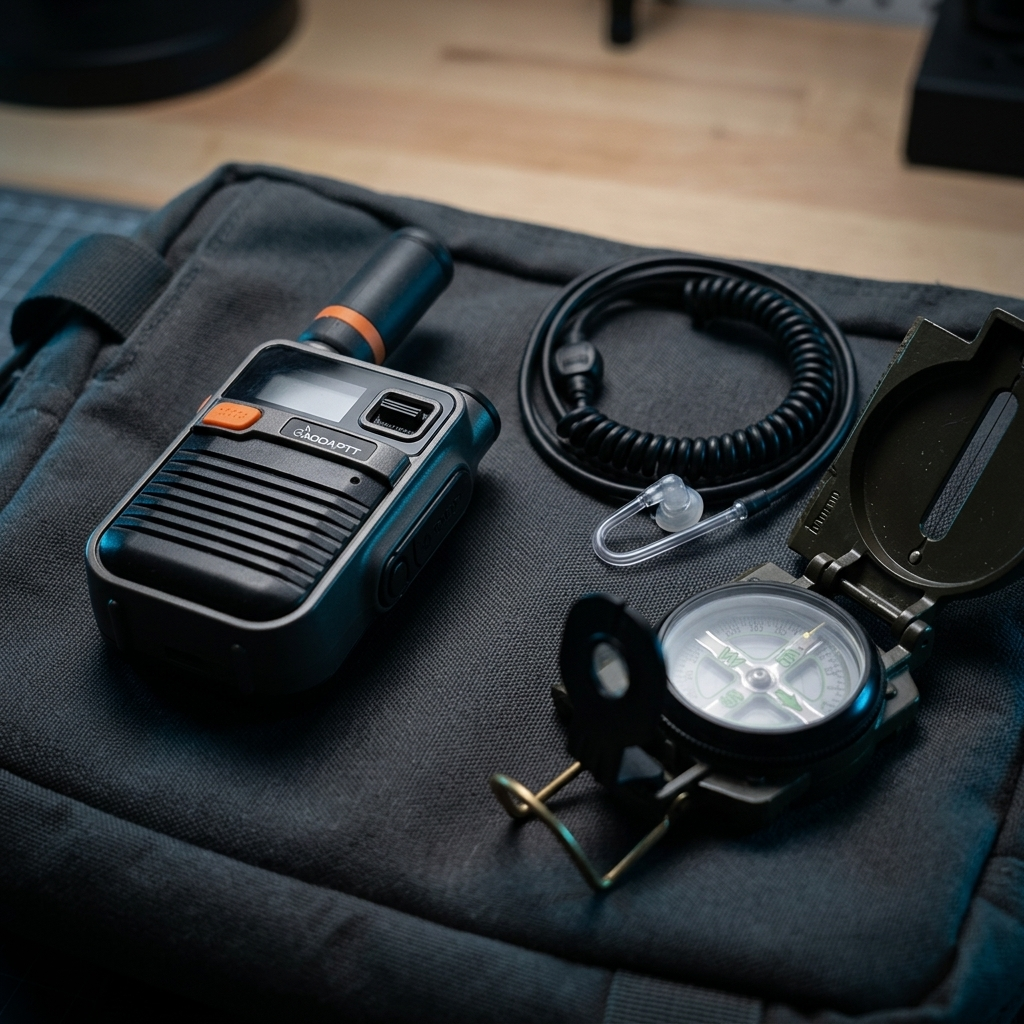
Zero-setup deployment. Pull it out of the box, press the button, and you're transmitting.
The second thing was the encryption. I asked what protocol they used. The answer was AES-256 — the same standard we used in military-grade encrypted communications. That's not marketing language. AES-256 is what governments and intelligence agencies use to protect classified information. The fact that it's built into a $99 commercial device and active by default — no key loading, no COMSEC procedures — changed my assessment entirely.
The radios use the 4G cellular network instead of traditional radio frequencies. The device has a SIM pre-installed — there's nothing to configure, no network to join, no infrastructure to deploy. Your voice travels as encrypted data over the mobile network. That means no repeaters, no line-of-sight requirement, no range limits beyond cell coverage. During our exercise, one element was operating seven miles out in a wooded valley. On the analog rig, they were in a dead zone. On the TalkiesWorldWide, they came through perfectly.
"The encryption is AES-256 — the same standard used in military-grade comms. And the radio is deployment-ready straight out of the box. No key loading, no COMSEC procedures, no repeater infrastructure. That changed everything for us."
— James Rourke, Former Signals OfficerWhy this matters for tactical operations
In the military, we accepted the complexity of comms because there was no alternative. You needed repeaters for range. You needed COMSEC officers for encryption. You needed hours of setup time before every operation. The TalkiesWorldWide collapses all of that into a single device that works the moment you take it out of the packaging.
For private tactical teams, security details, and training operations, this is significant. No FCC license required — it operates on cellular, not radio frequencies. No infrastructure to transport or set up. No frequency deconfliction with other units in the area. You hand each operator a radio, and everyone is on comms within seconds.
The IP67 rating means it handles dust, rain, mud, and submersion. I dropped one in a stream crossing during the exercise. Fished it out, pressed PTT, and it transmitted fine. The multi-day battery life means you're not carrying spare batteries or hunting for charging points in the field. And with up to 250 users on a single channel, it scales from a fire team to a full company-sized element without any network changes.
Talkies has contacted us to let our readers know stock is available now. The CREW pack (8 units) is $649 and the MILITIA pack (24 units) is $1,599 — both with free service included* for the first 2 years. No hidden fees, no subscription. Check availability while stock lasts.
The cross-border advantage
One thing that surprised me: these radios work across borders. Because they operate on cellular rather than licensed frequencies, there's no jurisdiction issue. We've had operators test them in three different countries during international training rotations. Same device, same channel, same encryption — no paperwork, no local licensing, no frequency reprogramming. For teams that deploy internationally, that alone eliminates a logistics headache that usually takes weeks to sort out.
The dedicated external antenna is another detail worth noting. Unlike a phone, which shares its antenna across WiFi, Bluetooth, and cellular, the TalkiesWorldWide has a purpose-built external antenna for 4G only. In practice, that means it holds signal in places where phones drop out — basements, parking structures, dense tree cover, concrete buildings. During our exercise, the radio maintained transmission in areas where two of our team members had no phone signal at all.
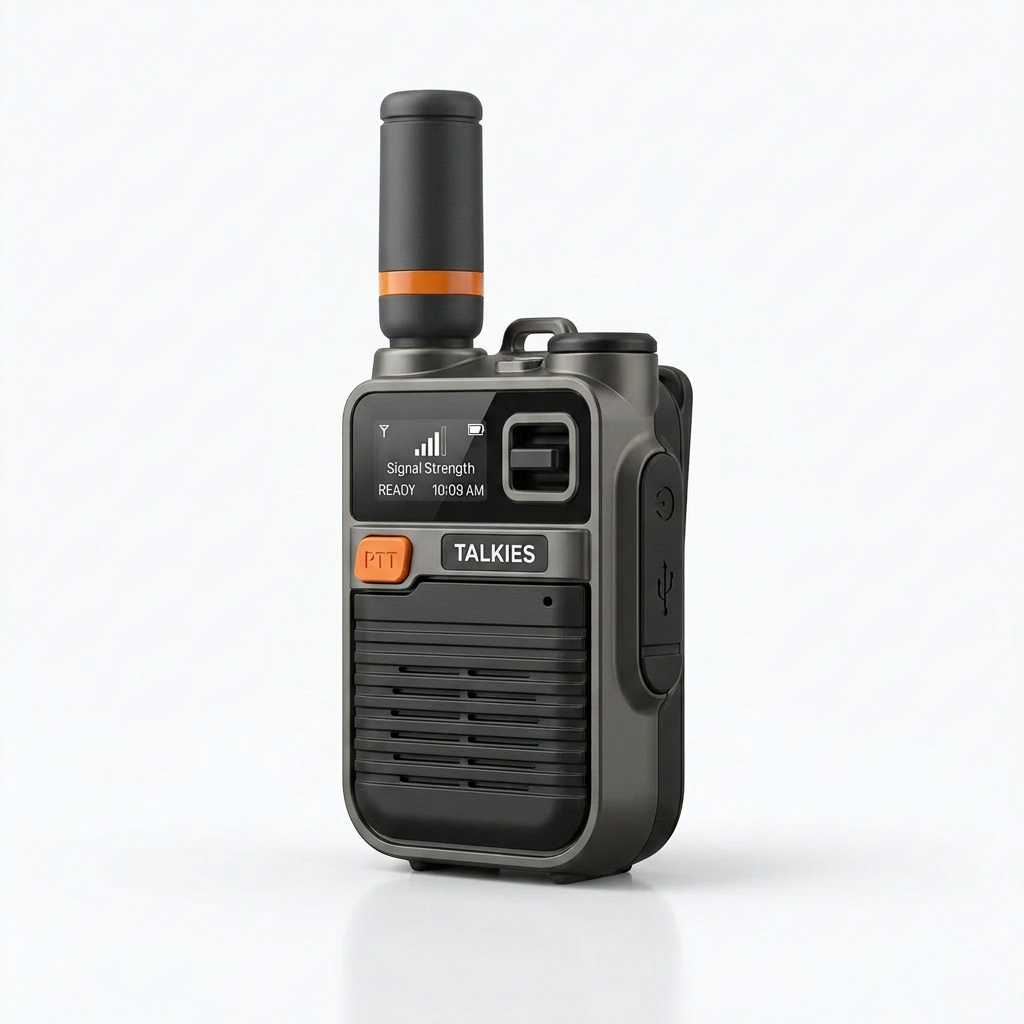
IP67 rated, AES-256 encrypted, multi-day battery — built for operators who need comms that just work.
What I told command
After the exercise, I wrote up a brief. The summary was simple: for a fraction of what we spend maintaining our legacy comms infrastructure, we could equip the entire team with encrypted, zero-setup, unlimited-range radios. Command was skeptical — until I showed them the encryption spec and the operational results.
We ordered the MILITIA pack — 24 units. That covered every operator on our team with spares. Total cost was less than what we'd spent on repeater maintenance in the previous quarter. The radios arrived, we handed them out, and the team was on encrypted comms within five minutes. No setup briefing required.
There are cheap knockoff PTT radios on Amazon and AliExpress. They look similar but don't include the SIM or the service. Some claim 4G but operate on Wi-Fi only. Make sure you're buying official TalkiesWorldWide — the device and service are sold together, and the SIM is already in the box when it arrives. One purchase. No subscription portal, no activation fee, no per-seat licensing.
Some notes:
- You don't need to set anything up — SIM is pre-installed, deployment-ready out of the box
- AES-256 encryption — same standard used in military and government comms
- multi-day battery — charge it before deployment, forget about it for the week
- Free service included* — no monthly bills, no subscription*
- Works on any 4G network — no repeaters, no infrastructure, no line-of-sight
- Up to 250 operators on one channel — scales from fire team to company
- No FCC / Ofcom license required — operates on cellular, not radio frequencies
- IP67 rated — dust, rain, mud, submersion. Field-proven
- Works across borders — no frequency reprogramming, no local licensing
I've spent my career working with comms systems that cost six figures and require dedicated specialists to operate. The fact that a $99 radio now delivers encrypted, worldwide, zero-infrastructure communication is something I wouldn't have believed two years ago. But I've tested it in the field, and it works.
Talkies has contacted us to let our readers know stock is available now. The CREW pack (8 units) is $649 and the MILITIA pack (24 units) is $1,599 — both with free service included* for the first 2 years. No hidden fees, no subscription. Check availability while stock lasts.